
Documents Needed for Heavy Haul Permit Services
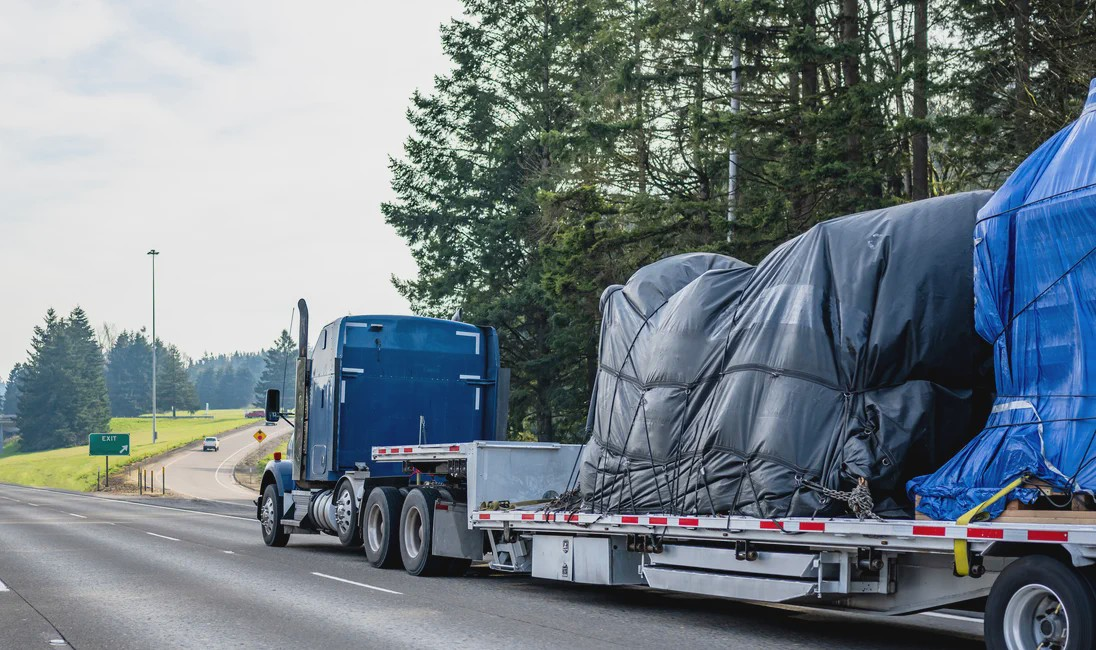
When you’re hauling heavy freight across state lines, the paperwork can hold up your load just as fast as a weigh station. Submit the wrong vehicle weight, miss a required insurance certificate, or leave your USDOT number off the application, and you’re looking at rejected permits and delayed deliveries. Coast 2 Coast handles trucking permit services across all 50 states and Canada, and one thing our agents see constantly is incomplete documentation slowing down approvals.
This article breaks down the key documents you should have ready before requesting heavy haul state permits. Getting your paperwork squared away upfront saves time on every single move.
Key Takeaways: Documents Needed for Heavy Haul Permits
- Accurate vehicle dimensions and axle weights are the single most common cause of permit application rejections.
- Your USDOT number, proof of insurance, and Federal ID are required on nearly every state permit application.
- Each state sets its own documentation rules, so one standard packet won’t cover every jurisdiction.
- Coast 2 Coast keeps up-to-date records of state requirements so your applications go through the first time.
- Missing a single local or county permit document can delay your load just as much as missing the state permit.
Essential Documents for Heavy Haul State Permits
1. Vehicle Registration and USDOT Number
Every overweight permit application starts with your vehicle registration. States need to verify the truck and trailer combination that will carry the load. Your USDOT number ties your equipment to your carrier record, and most states won’t process an application without it.
Double-check that your registration matches the vehicle identification number (VIN) on file. A mismatch between your registration and your permit application is one of the fastest ways to get sent back to square one.
2. Proof of Insurance and Liability Coverage
States require proof that your vehicle carries adequate insurance before they’ll issue a heavy haul permit. Minimum liability coverage varies by jurisdiction, but the FMCSA sets baseline requirements for interstate carriers at $750,000 for general freight and $5,000,000 for certain hazardous materials.
Some states ask for a Certificate of Insurance (COI) listing that state’s DOT as a certificate holder. Prepare updated COIs before you start the application process, because expired or incorrect insurance documents are a common rejection trigger.
3. Accurate Load Dimensions and Weight Specifications
Permit offices need exact measurements for your load: overall height, width, length, front overhang, rear overhang, and gross vehicle weight. Federal regulations set the standard baseline at 80,000 pounds gross vehicle weight, 8 feet 6 inches (102 inches) in width, and 13 feet 6 inches in height.
Once your load exceeds any of those limits, permits come into play. Measure your freight carefully and report accurate figures. Wrong dimensions on the application mean rejected permits, resubmissions, and wasted time on the road.
4. Axle Configuration and Spacing Details
Beyond total weight, states look at how that weight is distributed across your axles. You’ll need to report the number of axles, axle spacing, and individual axle weights for both the tractor and trailer. Federal limits cap single axles at 20,000 pounds and tandem axles at 34,000 pounds.
Some states apply bridge formulas that factor in the distance between axle groups, which can affect whether your configuration qualifies for a standard permit or requires a superload permit with additional engineering review.
5. Federal ID and Employer Identification Number (EIN)
Your Federal ID number and Employer Identification Number (EIN) link your permit application to your business entity. States use these to verify your carrier status and confirm you’re authorized to operate commercially. Some jurisdictions also ask for your Social Security Number (SSN) if you’re a sole proprietor.
Keep these numbers readily accessible in your permit filing system. When you’re submitting applications across multiple states for a single heavy haul move, having your Federal ID on hand prevents delays at each step.
6. License Plate Number and Vehicle Identification
Every permit application requires the license plate number, unit number, and vehicle make, model, and year for the hauling equipment. States cross-reference this information against their registration databases, so any discrepancy between your submitted details and their records triggers a hold on your permit.
If you’re running temporary trip (IRP) permits alongside your heavy haul permits, make sure the vehicle details match across all applications. Inconsistencies between your IRP paperwork and your oversize/overweight application can cause both to stall.
7. Load Description and Non-Divisibility Statement
Most states issue overweight and oversize permits only for non-divisible loads. You’ll need a clear description of what you’re hauling and why it can’t be broken down into smaller loads in an eight-hour window. Construction equipment, industrial machinery, and power generation components are common examples.
If a state questions whether your freight qualifies as non-divisible, having a detailed load description ready speeds up the review. Include the commodity type, intended use, and why dividing the load would compromise its structural integrity.
8. State-Specific Application Forms and Local Permits
Here’s where things get interesting. Each state has its own permit application forms and supplemental requirements. Texas, for example, uses its MCD-1700 form for self-issued permits. New York requires separate applications through its NY Permits system for certain weight categories.
Beyond state-level permits, your heavy haul may also need county or township permits for local roads along the way. These local jurisdictions sometimes require additional documentation, such as proof of escort vehicles or pilot car arrangements, before they’ll issue a local travel authorization.
Why Organized Permit Documentation Gets Your Freight Moving Faster
Every document on this list serves a specific purpose in the permitting process. Missing even one item forces a resubmission, and that means your load sits while the paperwork catches up. For multi-state heavy haul moves, the documentation adds up quickly because each jurisdiction has its own set of forms and verification requirements.
Coast 2 Coast keeps current records of every state’s documentation requirements and handles the submission process for all types of permits across the U.S. and Canada. Instead of tracking down forms, verifying insurance certificates, and coordinating with multiple state offices, let our permit agents handle the details while you focus on the road.
Ready to get your permits in order? Order permits online or call 888-963-0830 to speak with a permit agent.
FAQs about Documents Needed for Heavy Haul Permit Services
What is the most important document for a heavy haul permit application?
Your vehicle registration paired with accurate load dimensions and weight is the most critical combination. States verify your equipment against these specs before issuing any oversize or overweight permit.
Do I need separate documents for each state I travel through?
Yes, each state requires its own permit application and supporting documents. Coast 2 Coast coordinates multi-state permit submissions so you don’t have to manage each one individually.
What happens if my insurance documentation is expired?
An expired Certificate of Insurance will result in a rejected application. Update your COI before submitting permit requests and verify that each state’s DOT is listed as a certificate holder where required.
Why do states require a non-divisibility statement?
States issue overweight and oversize permits only for loads that can’t be reduced to legal limits in eight hours. The non-divisibility statement proves your freight qualifies for permitted movement.
Can I use the same application form for every state?
No. Each state has unique permit application forms and requirements. Some states accept online submissions, while others require fax or email. Coast 2 Coast tracks each state’s current process.
How do I prepare for county and township permit requirements?
Check whether your planned path crosses any county or township roads that require local permits. These jurisdictions may ask for additional documentation, including escort vehicle arrangements and separate insurance verification.